
Interior DesigN: Kitchen - Living - dining
The project
Our clients were making only a short move geographically - remaining within the same village on the outskirts of Tunbridge Wells - but it represented a significant change in the type of home they would be living in. They were saying goodbye to a Grade II listed Wealden farmhouse steeped in more than 400 years of history, and saying hello to a contemporary property within a beautifully designed gated development.
While their new home would provide a warm, convenient and peaceful setting for retirement, it also offered the perfect opportunity to capture some of the colour, character and sense of heritage they had loved so much in their former farmhouse.
the brief
As only the second owners of the property, the house still felt very much like a new-build blank canvas—although there was some dated wallpaper to contend with first. Our brief was to introduce a sense of age, character and heritage, while carefully balancing these elements with the home's contemporary architecture and finishes. Our clients wanted the interiors to feel like a harmonious blend of old and new, with a strong connection to the surrounding countryside.
The development sits on the edge of the village and boasts 47 acres of private woodland, which begins just beyond our clients’ garden. This beautiful setting became an important source of inspiration throughout the project.
We also had several existing pieces of furniture to incorporate. Rather than replacing them, our clients were keen to refresh these much-loved items with new fabrics and colours, giving them a new lease of life in their new home.
what we did
Our starting point for the open-plan kitchen, living and dining space was to find a hard-working hero fabric for the window treatments. Anna French’s Chelsea fabric, with its contemporary floral design, perfectly captured the brief of bridging traditional and modern styles. Its deep khaki green became the foundation of the scheme, allowing us to layer in additional countryside-inspired tones including warm browns, mustard yellows and soft neutrals.
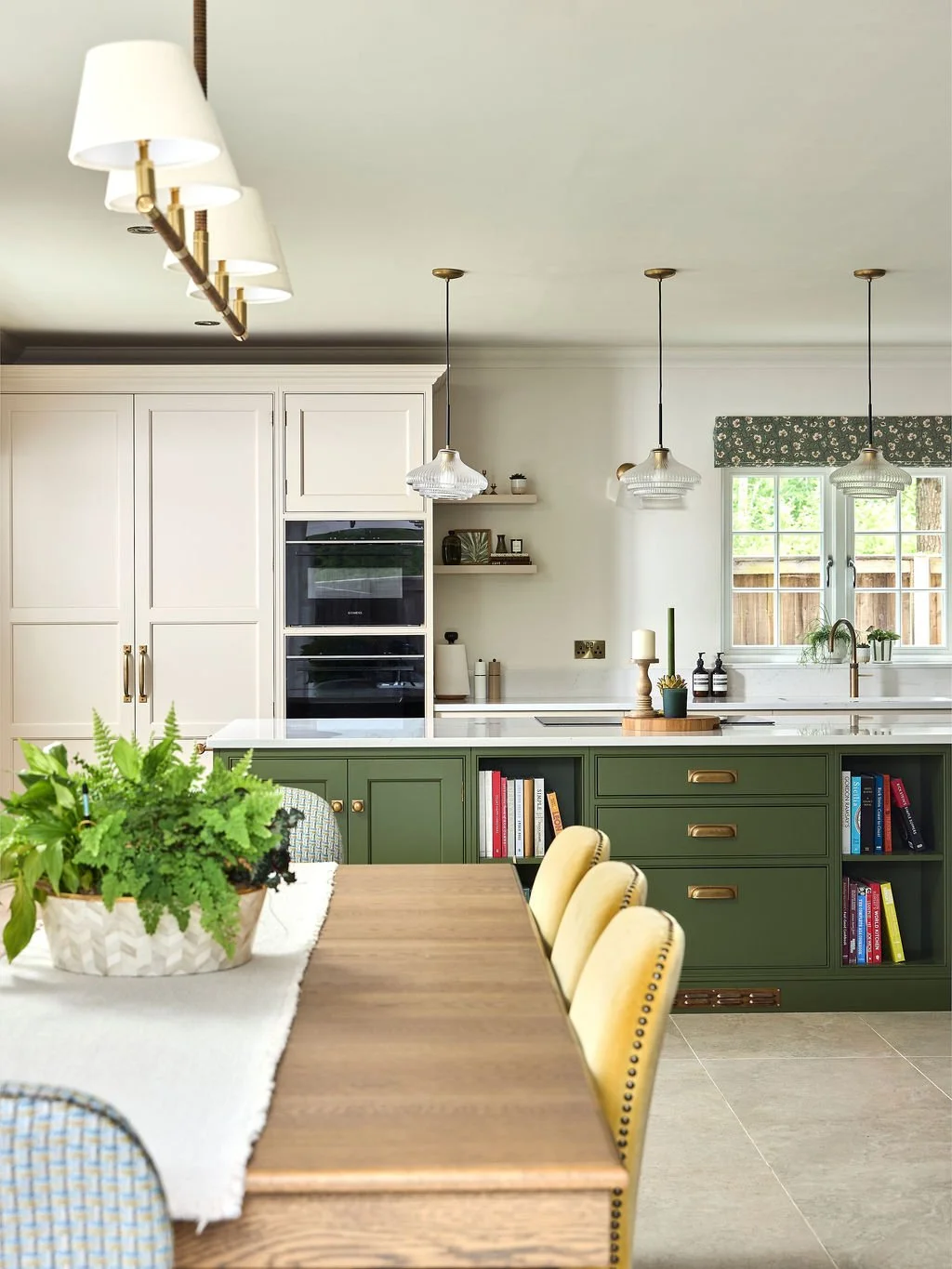
To reinforce this palette, we selected Little Greene’s Olive Colour for the kitchen island and bi-fold larder. With roots in the 18th century, this rich green brought depth and character to the space, grounding the island - the largest freestanding element in the room - and placing our hero colour firmly at the heart of the home. The remaining cabinetry and walls were colour-drenched in Farrow & Ball’s Slipper Satin, creating a warm backdrop that allowed the green tones to truly shine while ensuring the room felt welcoming throughout the year.
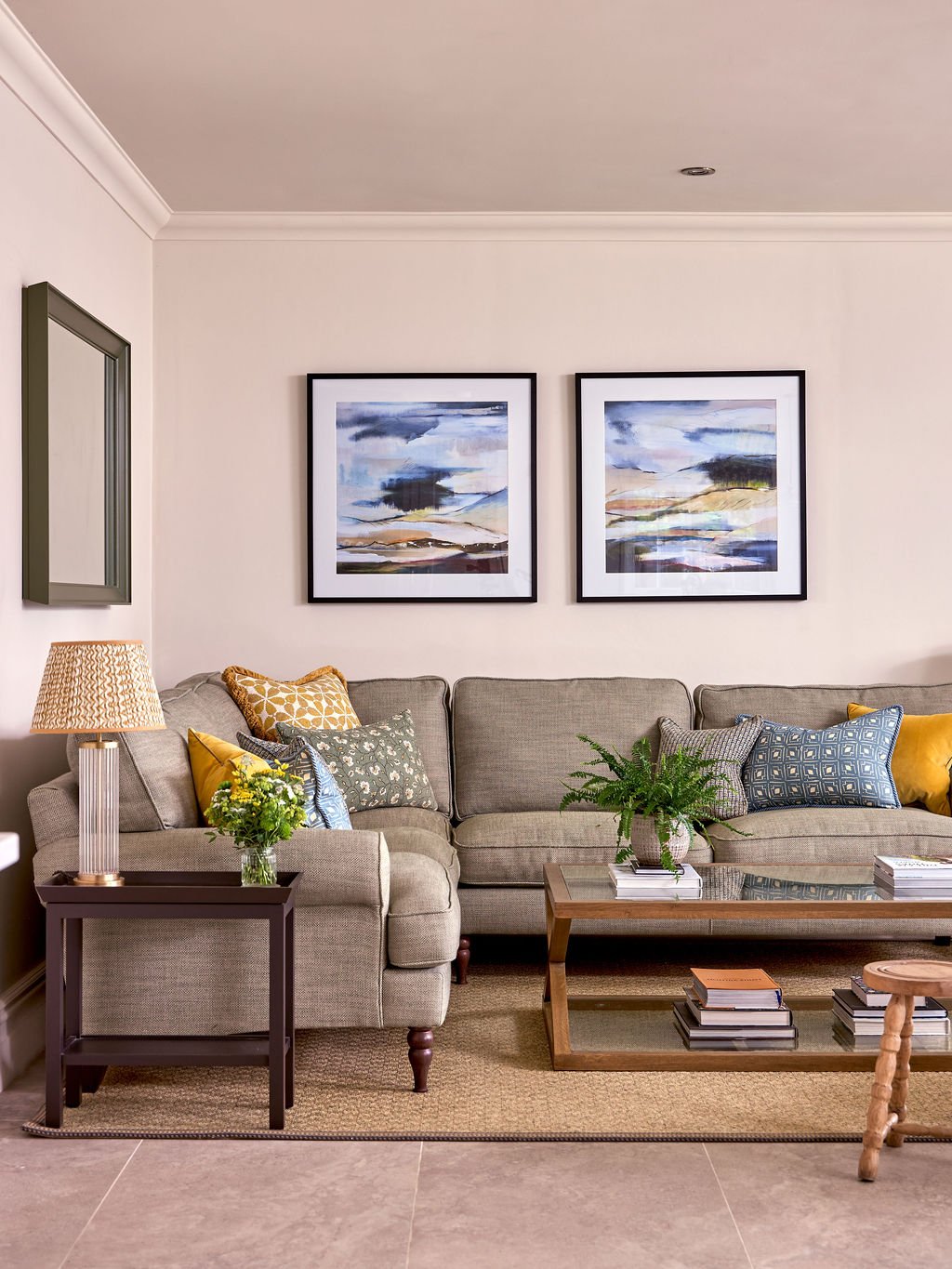
As this family loves to gather, and the kitchen naturally becomes the hub of activity, maximising seating was a key consideration. A generous L-shaped sofa provides ample space for family, guests, grandchildren and dogs alike. Positioned neatly into a corner, it helps maintain an open, sociable layout, ensuring there are no visual barriers interrupting the flow through the heart of the home.
One treasured piece our clients brought with them from their farmhouse was a fantastic bespoke wooden dining table. Simple yet undeniably impactful, its rich timber immediately introduced warmth and a sense of heritage. We built upon this by selecting complementary finishes throughout the room, including stained timber sofa and chair legs, walnut-toned side tables, and the beautiful cane detailing on the Porta Romana pendant light. Together, these elements create a cohesive and layered scheme that celebrates natural materials.
Alongside the larger moments of colour and impact - the kitchen island, sofa, dining table and dining chairs - we were equally focused on introducing softness. New-build homes can often feature an abundance of straight lines, hard surfaces and expansive glazing, so the addition of sheer curtains proved transformational. Rather than opting for a plain fabric, which would have felt more overtly contemporary, we chose a subtle Designers Guild pinstripe. Delicate and understated, it softens the large French doors, adds visual interest to the walls and enhances the overall sense of comfort without competing with the other fabrics in the room.
Brass hardware provided another subtle nod to tradition, while a reeded finish introduced an extra layer of texture and detail that helped move the space away from a typical new-build aesthetic.
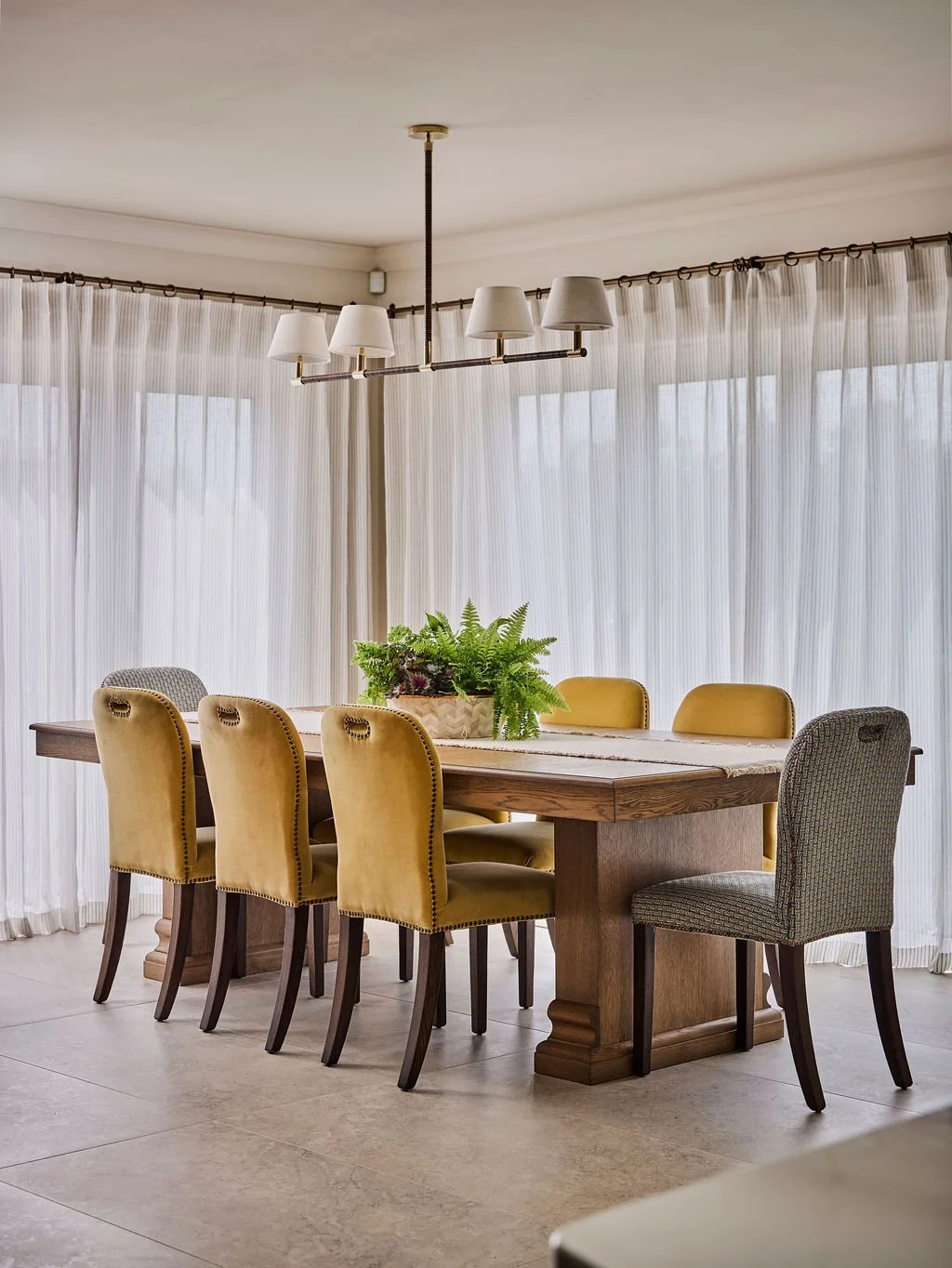
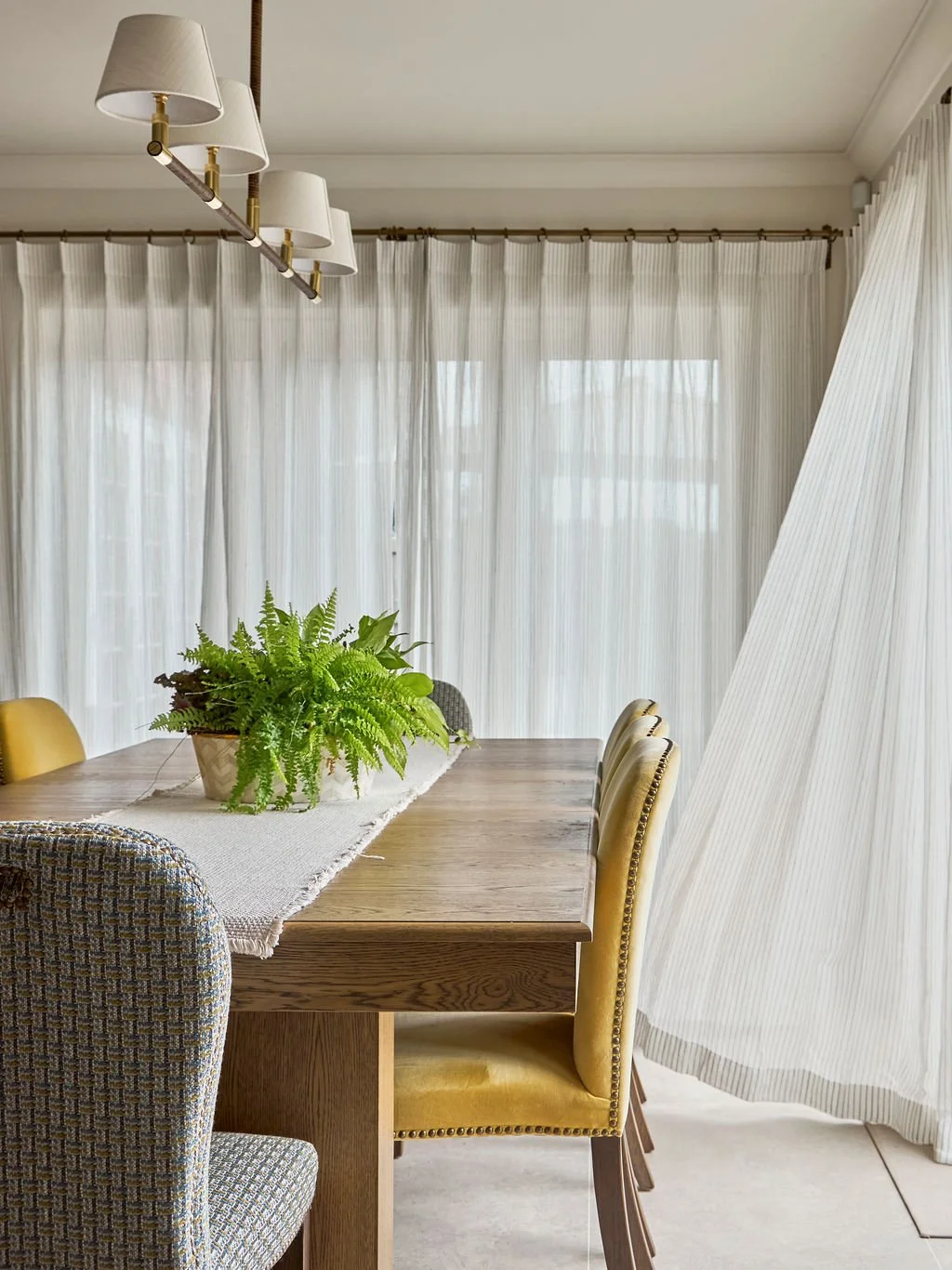
Finally, we dressed the room with rich golds and mustards, alongside pops of blue and citrus tones. Perhaps the most impactful accessories of all, however, were the plants. There is simply no substitute for real foliage and flowers. Ferns and palms bring vibrant greens, organic forms and a sense of movement to the interiors, while a large planter on the dining table creates a striking focal point and establishes a direct connection to the gardens - and woodland - beyond.