
the beauty of unloved spaces
There is something quietly transformative about turning one’s attention to the overlooked corners of the home. The spaces that are hurried through, apologised for, or simply shut away behind closed doors. Utility rooms piled with laundry, cloakrooms that feel more functional than fabulous, kitchens that work hard but lack soul. These so-called “unloved” spaces hold enormous potential - and, when dressed properly, they can bring a surprising amount of joy to everyday life.
We often remind our clients that good design should never stop at the sitting room door. A truly cohesive home renovation considers every space, however small or practical. In fact, it is often these functional rooms that benefit most from thoughtful fabrics, beautiful window treatments and a little creative bravery.
The utility room: from afterthought to asset
Utility rooms are typically treated as purely practical zones. White walls, a run of cabinetry, perhaps a blind that was chosen in haste. Yet this is a room you might visit multiple times a day. Why shouldn’t it feel uplifting?
One of our favourite approaches in luxury interior design projects across Kent, Sussex and Surrey is to introduce softness into these hardworking rooms. Tailored curtains can be used in wonderfully inventive ways - not just at the window, but across open shelving, beneath worktops or even to conceal appliances. A pair of neatly gathered curtains hiding a washing machine instantly softens the look of the space. It also introduces colour, texture and pattern in a way that cabinetry alone cannot achieve.
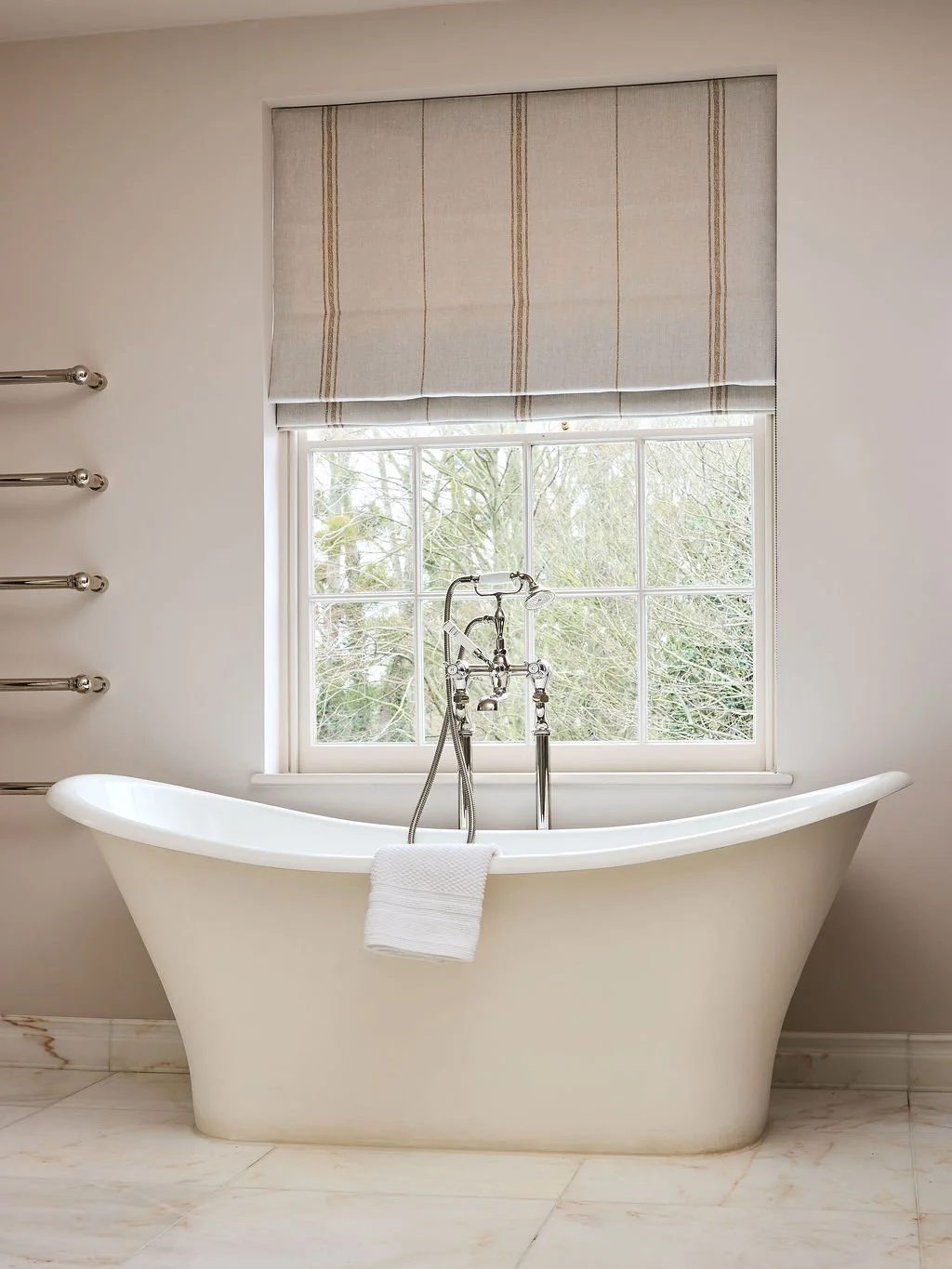
Choosing the right fabric is key. In a utility room, practicality matters, so consider washable linens, robust cotton blends or performance fabrics that can withstand humidity and frequent use. A small-scale print can add charm without overwhelming the room, while a ticking stripe lends a timeless, country house feel that works beautifully in period properties throughout the South East. Window treatments here should feel considered rather than makeshift. A relaxed Roman blind in a textured fabric offers both privacy and polish. If the room overlooks a garden, a simple café curtain can soften the view while allowing light to flood in. These details signal that the space has been designed with care - not simply assembled.
Cloakrooms: a jewel box opportunity
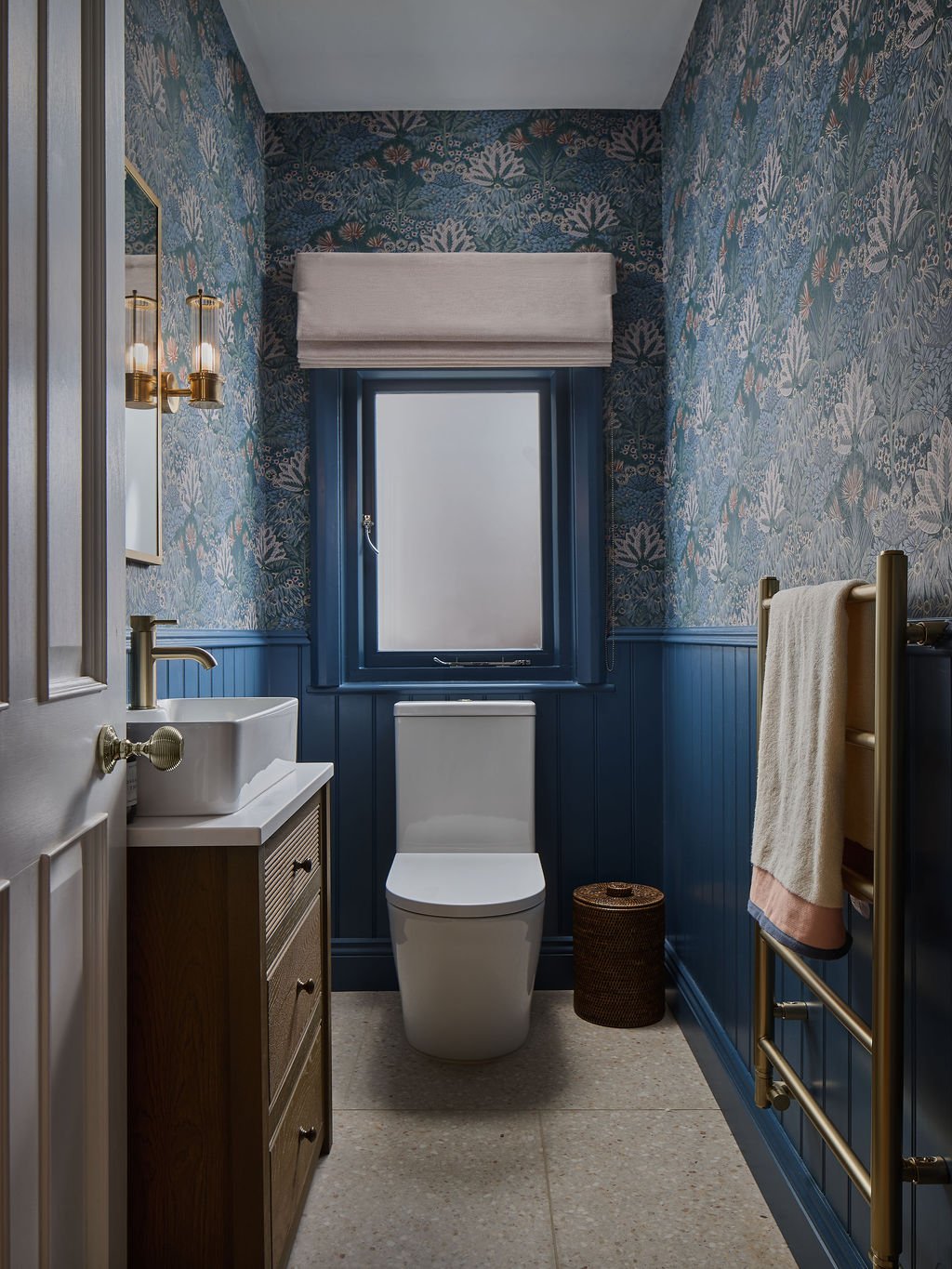
Cloakrooms are perhaps the most underestimated rooms in the house. Because they are small, they are often left until last. Yet they are also the rooms your guests are most likely to visit. We encourage our interior design clients to treat cloakrooms as jewel boxes - spaces where you can be bolder with pattern, colour and fabric. Upholstered panels, gathered sink skirts or even a fully curtained wall can transform a purely functional space into something memorable.
A skirted basin, for example, is both practical and charming. It hides unsightly pipework while offering an opportunity to introduce a delightful fabric - perhaps a floral chintz in a traditional home in Tunbridge Wells, or a crisp stripe in a coastal property near Rye. Trim detailing, such as a contrast border or gentle pleating, elevates the look further.
Window treatments in cloakrooms deserve equal attention. Even the smallest window can be dressed beautifully. A softly gathered voile curtain allows natural light to filter through while maintaining privacy. Alternatively, a tailored Roman blind with a decorative tape trim adds a layer of refinement that speaks to thoughtful interior architecture and design.
Kitchens: the heart of the home, properly dressed
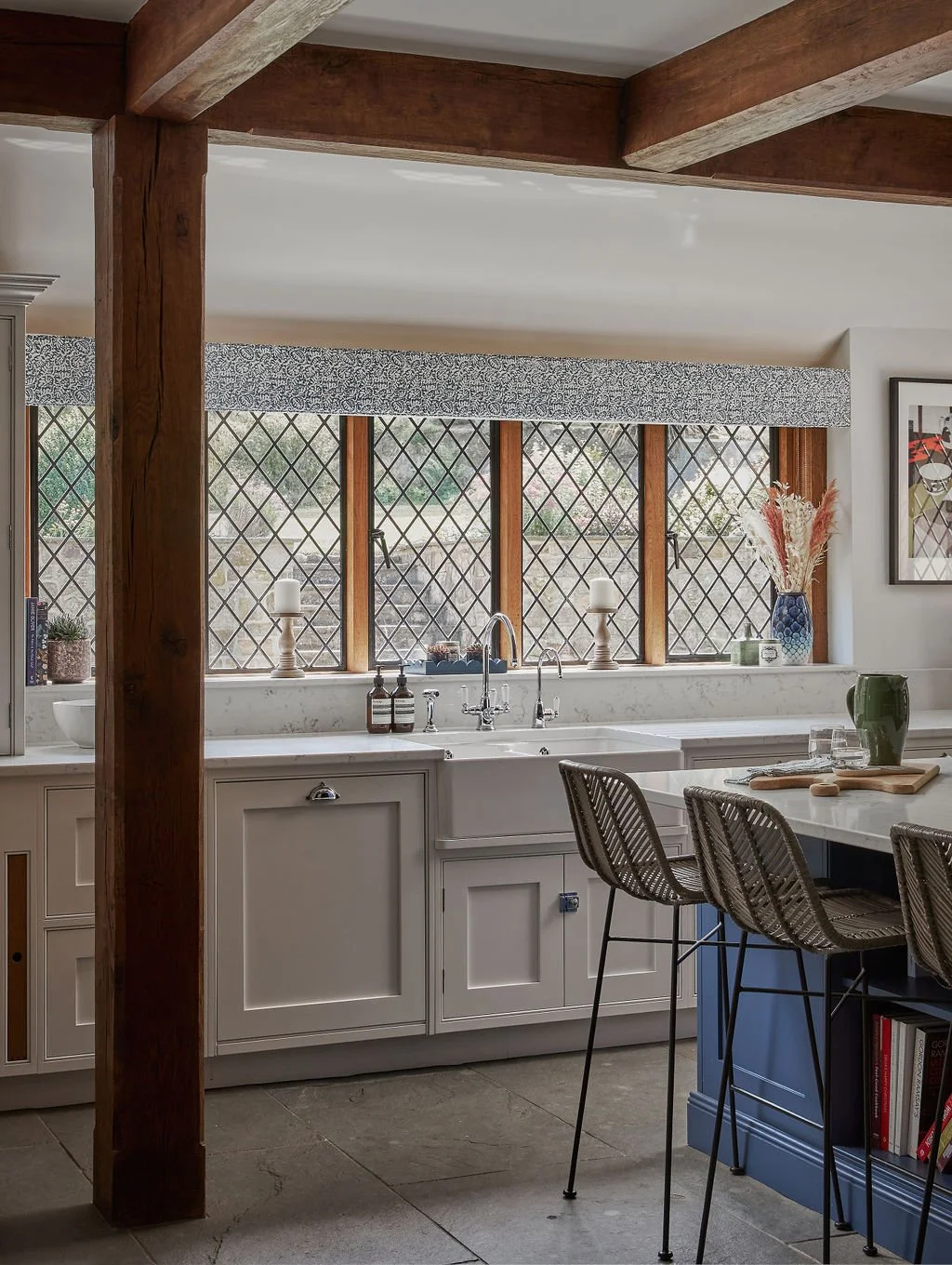
The kitchen has long been considered the heart of the home, and rightly so. Yet in the pursuit of sleek cabinetry and stone worktops, softness is sometimes forgotten. Introducing fabric into a kitchen can feel counterintuitive, but when done well, it balances the hard surfaces and creates warmth. Curtains beneath an island overhang, fabric panels concealing open storage, or even a full-height curtain to divide a pantry area - these are all solutions we have implemented in bespoke interior design schemes across the South East.
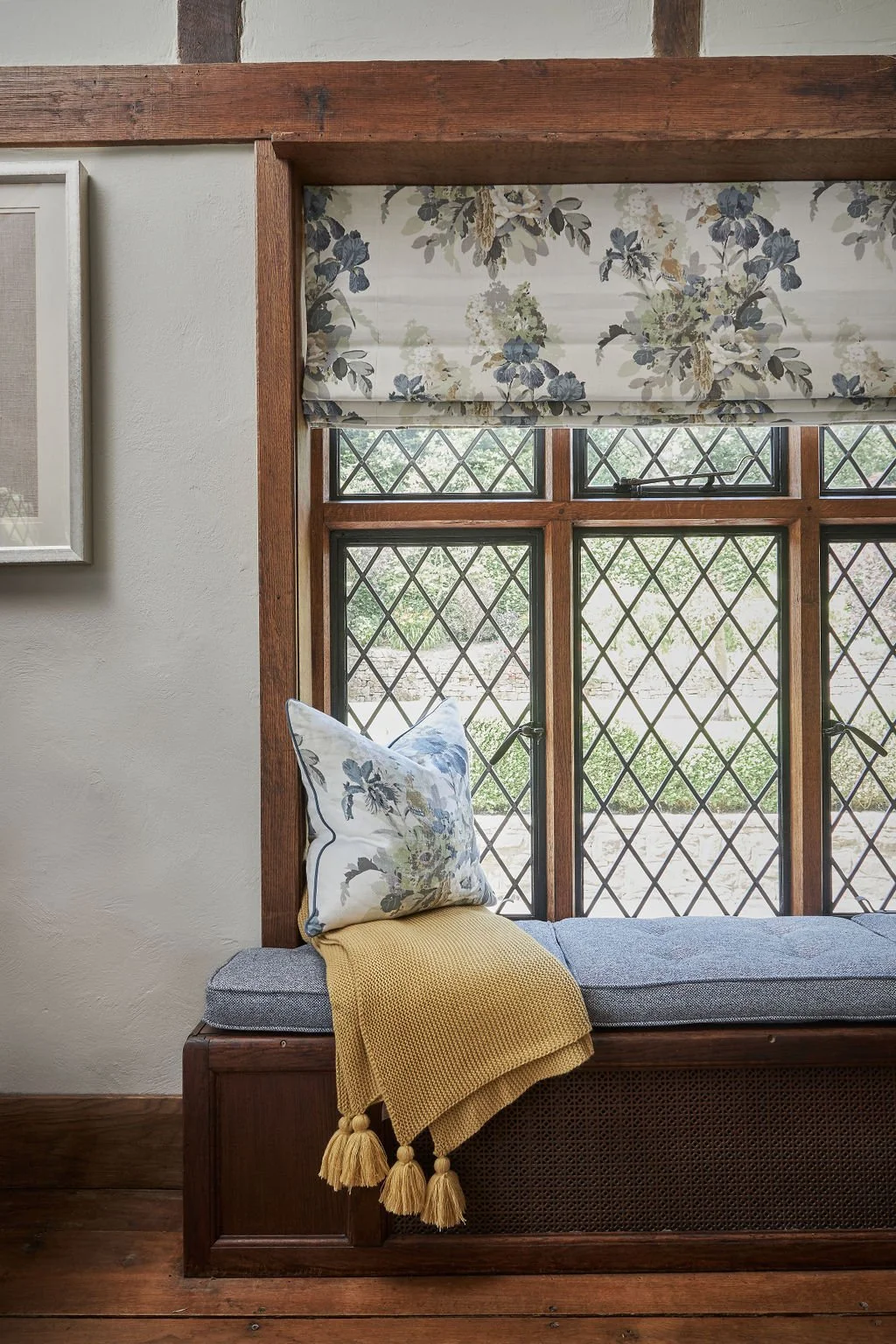
For windows, the choice of treatment should reflect how the kitchen is used. In a busy family home, a durable Roman blind in a robust fabric may be the most practical option. In a more formal kitchen-dining space, floor-length curtains in a relaxed linen can add elegance and soften acoustics. Pattern is particularly powerful here. A botanical print can bring the garden indoors, while a subtle check or stripe introduces a sense of heritage. When working on period homes in Sussex or Georgian townhouses in Surrey, we often draw on traditional patterns to honour the property’s character while ensuring the scheme feels fresh and liveable.
The emotional impact of dressing every space
There is a psychological shift that happens when every room in the house feels considered. Instead of rushing through the utility room or apologising for the cloakroom, you begin to enjoy them. Folding laundry becomes a more pleasant ritual. Guests notice the details. The home feels complete.
From an interior design perspective, this is where true cohesion lies. It is not simply about selecting beautiful furniture for the main reception rooms. It is about creating a thread that runs throughout the property - through fabric choices, colour palettes and window treatments - so that each space feels connected. For homeowners undertaking a full home renovation, investing in these smaller rooms often yields an outsized return in satisfaction. They are relatively compact spaces, meaning you can afford to be a little braver with fabric or indulge in a higher-quality finish.
Innovative yet timeless
While trends come and go, the idea of dressing a room properly is timeless. Curtains to conceal appliances, skirted cabinetry, upholstered walls - these are not gimmicks. They are rooted in traditional interior decoration, reimagined for modern living.
As an interior design studio working across Kent, Sussex and Surrey, we see again and again how transformative these details can be. The joy lies not in extravagance, but in intention. In choosing a fabric that makes you smile each morning. In adding a trim that catches the light just so. In refusing to let any room be an afterthought. Because when even the “unloved” spaces are dressed with care, the whole home feels elevated - and everyday life, in all its practical routines, becomes that little bit more beautiful.
Until next time,
Chloe